In the fast-paced, AI-driven threat landscape of 2026, Chief Information Security Officers (CISOs) are under more pressure than ever to defend expansive attack surfaces while strictly managing their bottom line. Boardrooms are demanding clear metrics on the ROI of security testing, pushing IT leadership to justify every dollar spent on their tech stack.
However, one of the most massive financial leaks in modern enterprise security rarely shows up on a procurement spreadsheet. It is the cost of false positives in cybersecurity.
When legacy vulnerability scanners and uncalibrated detection tools flood your dashboard with theoretical risks, your most expensive asset, your human talent, pays the price. Highly paid Security Operations Center (SOC) analysts are forced to spend hundreds of hours manually chasing down digital ghosts, verifying theoretical vulnerabilities that pose zero actual risk to the business.
This comprehensive breakdown exposes the hard financial realities of alert noise. By understanding how false positives drain your budget, cripple SIEM efficiency, and damage engineering workflows, security leaders can pivot toward a more sustainable, automated defense model; highlighting why Axeploit’s “No Exploit, No Report” approach is rapidly becoming the gold standard for CISO budget optimization.
The Financial Reality of SOC Alert Fatigue
To understand the scale of the problem, we must move past abstract complaints about “noise” and look at the actual math. In many enterprise environments, up to 40% of all security alerts generated by traditional dynamic and static scanners (DAST/SAST) are false positives or non-exploitable informational flags.
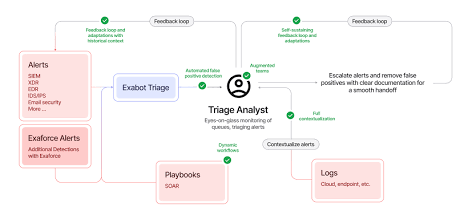
The Broken Triage Loop: How false positives cycle through SOC workflows, draining time and resources. Source: Exaforce: https://www.exaforce.com/
Breaking Down the Hourly Drain
Consider a mid-to-large enterprise SOC processing 1,000 vulnerability alerts a week. If 40% of those are false positives, that is 400 invalid alerts.
Industry benchmarks indicate that an analyst spends an average of 15 to 30 minutes triaging, investigating, and ultimately dismissing a single false positive.
- 400 false positives × 20 minutes = 133 hours wasted per week.
- 133 hours × 52 weeks = 6,916 hours wasted annually.
If a Tier 2 SOC Analyst or Security Engineer costs the business roughly $90 to $120 per hour (factoring in salary, benefits, and overhead), your organization is bleeding between $620,000 and $830,000 a year just to verify that your legacy scanners are wrong.
This is the true, quantifiable cost of false positives in cybersecurity. But the financial drain doesn't stop at payroll. The psychological toll results in SOC alert fatigue, leading to high employee turnover, missed critical alerts, and the expensive necessity of constantly recruiting and retraining burnt-out analysts.
How False Positives Kill SIEM Efficiency
Beyond human capital, false positives exert a heavy tax on your infrastructure. Modern enterprise security relies on Security Information and Event Management (SIEM) systems to aggregate and correlate data. However, most SIEM pricing models are deeply tied to data ingestion rates (Gigabytes per day) or computing power.
The Data Storage and Processing Tax
When legacy vulnerability scanners generate thousands of unverified alerts, all of that data must be ingested, indexed, and stored by your SIEM to comply with data retention policies. You are actively paying your SIEM vendor to store garbage data.
Furthermore, SIEM efficiency plummets when correlation rules are forced to process massive volumes of low-fidelity noise. Legitimate indicators of compromise (IoCs), such as a real automated LLM-based attack or a zero-day exploit attempt, are buried under an avalanche of theoretical SQL injection warnings that lack any exploitable path.
True CISO budget optimization requires trimming the fat from your data ingest pipeline. By stopping false positives at the source, you can drastically reduce SIEM licensing costs and ensure your correlation engines are processing high-fidelity threat intelligence, rather than filtering through legacy scanner spam.
The Ripple Effect: Wasted Engineering Hours and MTTR
The operational drain of a false positive does not stay confined to the SOC. When a security analyst cannot definitively prove an alert is a false positive, standard operating procedure dictates escalating it to the engineering or development teams for review.
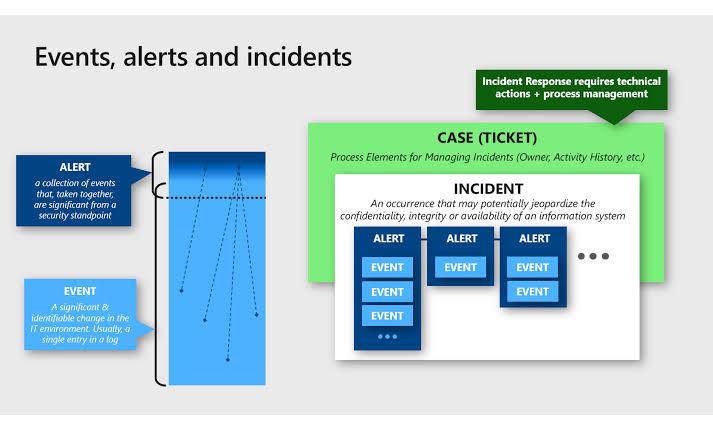
The Engineering Ripple Effect: How unverified security alerts disrupt DevOps workflows and delay product releases. Source: Microsoft: https://www.microsoft.com/
This is where the financial drain multiplies. Security issues are injected into Jira or ServiceNow, pulling developers away from revenue-generating feature work to investigate a vulnerability that doesn't actually exist.
Friction and the Deterioration of MTTR
When developers repeatedly investigate escalated tickets only to find they are unexploitable false positives, a dangerous organizational friction takes root. Engineering teams lose trust in the security department, viewing them as a bottleneck rather than a partner.
Consequently, when a real critical vulnerability is escalated, it is often met with skepticism and placed in the backlog. This phenomenon directly inflates your Mean Time to Remediate (MTTR). In 2026, where threat actors weaponize vulnerabilities in a matter of hours, an artificially inflated MTTR is an unacceptable enterprise risk. The ROI of security testing must be measured not just by what is caught, but by how rapidly and frictionlessly it can be patched by the engineering team.
Axeploit’s Solution: Automated Vulnerability Triage
The legacy approach to vulnerability management is fundamentally broken. You cannot achieve true CISO budget optimization by hiring more analysts to sift through the same volume of noise. The only sustainable path forward is to deploy intelligent, adversarial automation that completely removes the burden of validation from human hands.
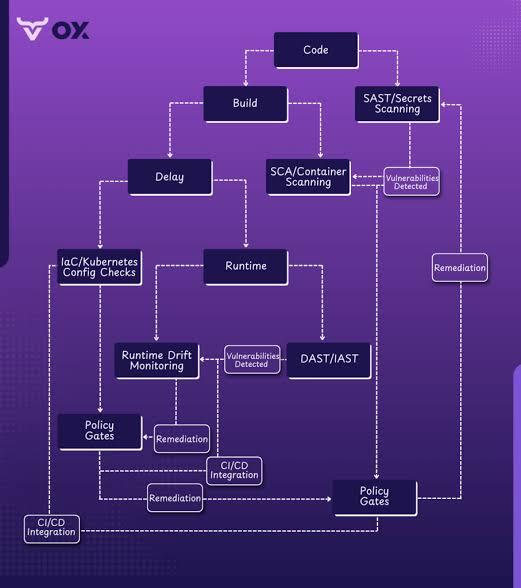
Automated Vulnerability Triage: Axeploit's DevSecOps integration verifies threats before they reach your team. Source: OX Security: https://www.ox.security/
This is exactly where Axeploit redefines the enterprise security landscape. Axeploit shifts the paradigm from volume-based alerting to accuracy-based defense through advanced automated vulnerability triage.
The “No Exploit, No Report” Model
Axeploit’s AI security agents do not just flag theoretical vulnerabilities based on regex matches or outdated signatures. When Axeploit discovers a potential weakness, it acts like a human penetration tester: it attempts to actively, safely exploit it.
Through a strict Discovery → Hypothesis → Exploitation → Verification loop, Axeploit determines the true risk of an anomaly.
- If the exploit is blocked by a Web Application Firewall (WAF) or a backend compensating control, Axeploit discards it.
- If the exploit is successful, Axeploit generates a verifiable Proof of Concept (PoC) and delivers it directly to your engineering team.
Because of this strict “No Exploit, No Report” philosophy, every single alert Axeploit generates is mathematically verified.
For SOC Managers and Directors of IT Security, the impact is immediate and highly measurable:
- Zero Wasted Triage Time: SOC analysts no longer spend their shifts chasing ghosts. Their time is reallocated to proactive threat hunting and strategic defense.
- Restored Engineering Trust: Because every ticket contains a working PoC, developers know the threat is real. Friction evaporates, and MTTR shrinks dramatically.
- Optimized Infrastructure Spend: By eliminating the noise at the source, SIEM ingest drops, directly saving on licensing and storage costs.
Conclusion
In the modern enterprise, security volume is not a metric of success; it is a liability. The cost of false positives in cybersecurity extends far beyond the nominal price of a scanner license. It drains your payroll, burns out your top talent, inflates infrastructure costs, and ultimately slows down your engineering lifecycle.
For CISOs looking to optimize their budgets in 2026, the mandate is clear: you must stop paying highly skilled professionals to do the mundane work of verifying broken alerts. By integrating platforms like Axeploit, organizations can leverage intelligent, automated vulnerability triage to guarantee that every alert is actionable. Eliminating false positives doesn't just save hundreds of thousands of dollars in hidden operational drains, it transforms your security posture from a reactive, noisy bottleneck into a lean, high-velocity enabler for the entire business.