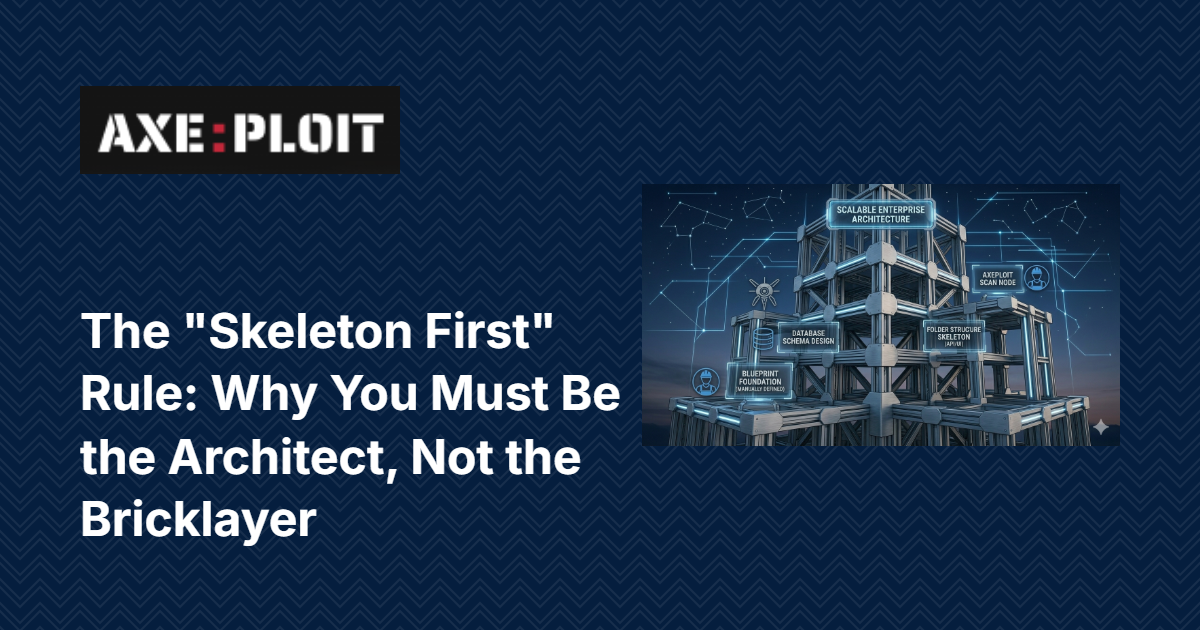
In the fast-paced world of modern development, we finally have the speed we’ve always dreamed of. AI tools can now generate thousands of lines of code in seconds, turning a simple prompt into a functioning feature before you can even grab a coffee. But this speed comes with a hidden cost: The House of Cards.
When you ask an AI to build a project from scratch without guidance, it makes hundreds of tiny, invisible decisions. It invents a folder structure on the fly and guesses at how your data should be organized. It looks like magic until you try to scale. That’s when the structure collapses, because the AI wasn't building a lasting application; it was just stacking bricks and hoping they wouldn’t fall.
To build software that scales, stays secure, and remains maintainable, you must follow the Skeleton First rule.
1. The AI is a Bricklayer, Not an Architect
The most common mistake in AI-assisted coding is assuming the model understands your long-term vision. It doesn't. Think of the AI as a world-class bricklayer: incredibly fast and precise, but only if it has a blueprint to follow.
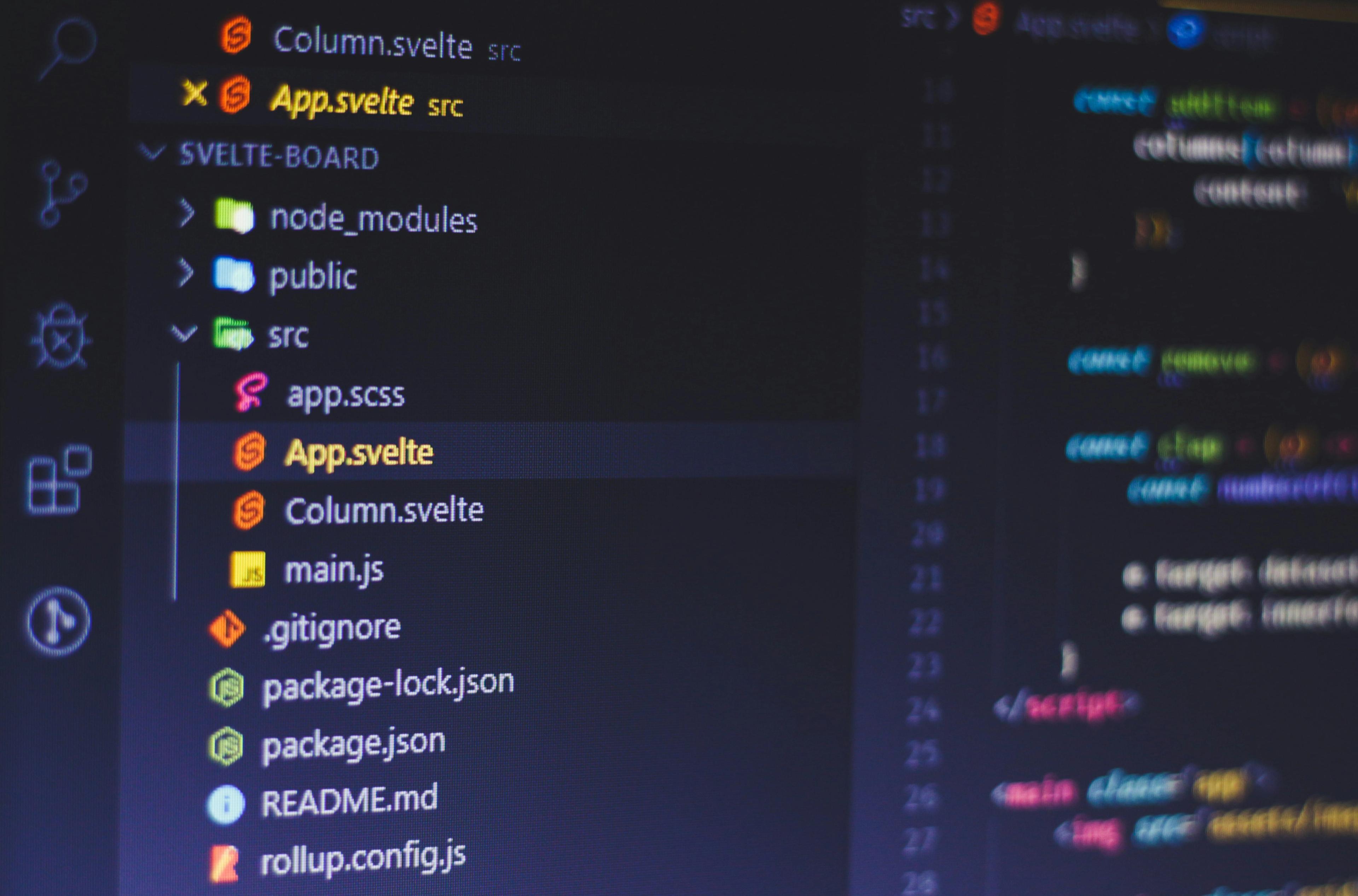
Without a blueprint, the AI starts laying bricks in the middle of a field. The Skeleton First rule dictates that YOU must manually define the folder structure and the database schema before the AI writes a single line of logic. By setting up your /src, /api, and /components folders yourself, you create the boundaries. You are telling the AI exactly where each piece of code belongs.
2. The Database Schema: Your Single Source of Truth
Your database schema is the foundation of your entire application. Everything else, the UI, the API, the business logic, is built on top of it.
When you let an AI "create" a schema, you risk inconsistency. It might use a string for a value in one file and an integer in another, or forget a critical relationship between tables. By defining the schema manually (using tools like Prisma or SQL), you ensure:
- Consistency: The AI has a fixed "dictionary" to refer to for every prompt.
- Predictability: You know exactly how data flows through your system.
- Scalability: Your foundation is built for growth, not just for a quick demo.
3. Folder Structure: Preventing "Spaghetti" Code
We’ve all seen AI-generated projects where every function is shoved into one massive, unreadable file. It works, but it’s a nightmare to update or debug.
By creating the Skeleton, the folders, the empty files, and the basic routing, you are providing "slots" for the AI to fill. You aren't asking it to "build a feature"; you are asking it to "write the logic for this specific file in the /auth folder." This keeps your code modular, clean, and human-readable.

4. Why Axeploit Loves a Good Skeleton
At Axeploit, we see the difference "Skeleton First" approach, makes every day. When an application is built like a "House of Cards," it inevitably develops security holes, broken access controls, data leaks, and authentication flaws, simply because there was no central architectural plan.
Axeploit’s autonomous agents think like attackers. When we scan an app with a solid "Skeleton," we help you verify that your plan is as secure as it is functional. A strong foundation allows our scanner to confirm the Structural Integrity of your project, ensuring that your speed doesn't come at the expense of your security.
The Bottom Line
Don't let the speed of AI make you a passive observer of your own code. Spend the first hour of your project being the Architect. Design the schema. Organize the folders. Build the skeleton.
Once the foundation is set, let the AI lay the bricks. You’ll find that the small amount of time spent at the start saves you weeks of refactoring and security patching at the end.