In the fast-paced ecosystem of DevSecOps, the threat landscape has shifted fundamentally. We are no longer just fighting human adversaries armed with pre-packaged scripts and rudimentary scanners; we are fighting intelligent machines. By 2026, the weaponization of large language models (LLMs) has birthed a new era of autonomous cyber warfare.
AI cyber attacks are now executing at a speed and scale that drastically outpaces traditional security operations. Threat actors are actively deploying offensive AI capable of automatically analyzing massive codebases, synthesizing novel fuzzing payloads, and dynamically adapting to Web Application Firewall (WAF) rules in real-time.
For CISOs, Security Architects, and Threat Intelligence Analysts, this rapid evolution presents an existential challenge. Static defenses and annual point-in-time penetration tests are fundamentally obsolete against adversaries that learn and adapt continuously. The reality is stark but simple: the only way to defend against an automated, intelligent threat is with an automated, intelligent defense. To survive the relentless onslaught of modern LLM threat actors, organizations must deploy AI security agents, positioning intelligent platforms like Axeploit as the necessary countermeasure to reclaim the digital high ground.
The Mechanics of Offensive AI: Inside the Machine's Playbook
Gone are the days when attackers spent weeks manually probing application perimeters, looking for a forgotten subdomain or an exposed database. Today, LLM threat actors deploy autonomous offensive agents designed to map entire enterprise attack surfaces in minutes. These agents do not rely on static vulnerability lists or simple signature matching. Instead, they actively “read” the application, mapping out undocumented shadow APIs, and comprehending the context of complex business logic.
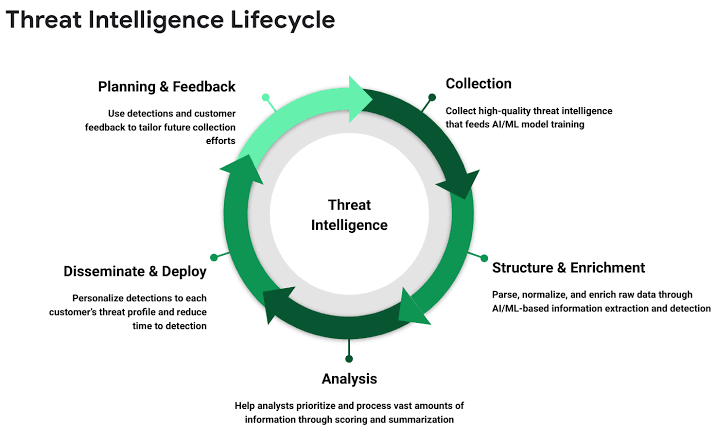
The intelligence lifecycle of an automated AI cyber attack. Source: Google Cloud
Real-Time Payload Generation and WAF Evasion
One of the most concerning capabilities of offensive AI is its approach to payload delivery. Traditional fuzzing (an automated trial-and-error attack method used to find software bugs) typically throws random, malformed garbage data at an application to see if it crashes.
AI-driven fuzzing is vastly different. The LLM understands the expected input format, whether it is a complex JSON schema, a GraphQL query, or an XML structure, and generates highly structured, contextually accurate malicious payloads designed specifically to bypass your initial validation layers.
Furthermore, if a modern Web Application Firewall (WAF) blocks the request, the attack doesn't stop. The offensive LLM instantly analyzes the HTTP rejection response, identifies which specific regex or WAF rule triggered the block, mutates the payload to evade that exact rule, and resubmits. This creates a terrifying loop of continuous, real-time evasion that static rule-based firewalls simply cannot keep up with.
Automated Threat Modeling and the Zero-Day Engine
Historically, finding a zero-day (a software vulnerability previously unknown to the vendor and defenders) required immense human resources, deep reverse-engineering skills, and weeks of dedicated time. In 2026, offensive AI has effectively commoditized zero-day discovery.
By performing automated threat modeling on open-source repositories, reverse-engineered mobile applications, and exposed microservices, LLMs can rapidly identify obscure logic flaws.
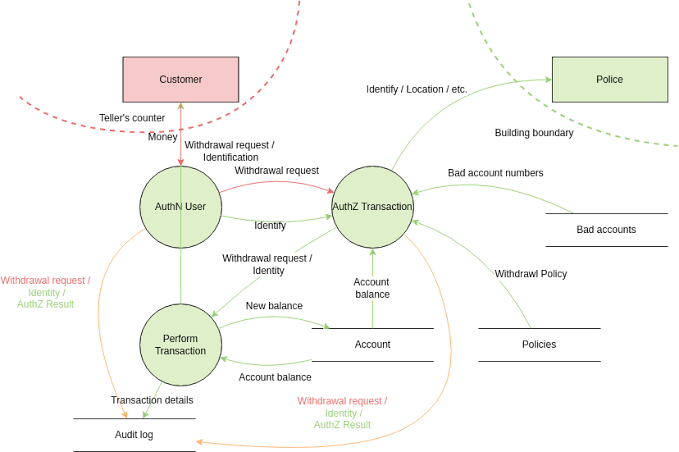
Automated threat modeling and logic flaw discovery flow. Source: Practical DevSecOps
These autonomous systems excel at connecting the dots across multi-step processes. For instance, a traditional scanner might miss a vulnerability because it requires a user to create an account, verify an email, downgrade their role, and then attempt an administrative action. An LLM threat actor, however, can model this exact state-machine in memory, testing combinations of API calls to uncover subtle race conditions, multi-factor authentication (MFA) bypasses, and complex Insecure Direct Object References (IDOR).
The machine does not get tired, it does not experience alert fatigue, and it does not stop testing when the workday ends.
Why Legacy Security Postures Are Failing
To understand why a new defensive paradigm is required, we must examine the structural limitations of the tools security teams have relied on for the past decade. The gap between how fast engineering ships code and how slowly legacy security tools audit it has become a highly exploitable attack vector.
Against an autonomous LLM threat actor, the following traditional security postures are fundamentally failing:
1. The Brittleness of Legacy DAST
Traditional Dynamic Application Security Testing (DAST) tools are notorious for their integration nightmare. To get them to work, security engineers must manually feed them session tokens, configure proxy rules, or record brittle login macros.
The moment your development team updates a frontend login flow or changes an API route, the DAST scanner breaks, leaving your pipeline running blind. Furthermore, legacy DAST struggles to navigate modern Single Page Applications (SPAs) and cannot independently test complex authentication boundaries, leaving critical flaws like weak OTP token generation or email verification bypasses completely untested. If a security tool requires constant manual API integration just to maintain baseline coverage, it is already obsolete against an AI that maps undocumented APIs automatically.
2. The Illusion of Point-in-Time Penetration Testing
Human penetration testing remains valuable for deep, creative problem-solving, but it is fundamentally constrained by time. A standard two-week, annual engagement forces assessors into prioritization decisions, focusing on known vulnerability classes rather than spending the necessary time to build context across dozens of application workflows.
Furthermore, point-in-time assessments are often executed against staging environments, which frequently differ from production in topology, data volume, and configuration. When engineering teams deploy code weekly (or daily), a point-in-time snapshot of your security posture decays immediately. An annual audit simply cannot keep pace with an offensive AI that actively probes your production environment the exact second a new CI/CD deployment goes live.
3. Blind Spots in Modern Authentication (OAuth & SSO)
Modern applications rarely rely on isolated, monolithic login forms. They rely on interconnected identity providers (IdPs), SSO protocols, and complex OAuth 2.0 flows to grant access across microservices. Legacy scanners evaluate individual endpoints in a vacuum, completely missing the trust relationships connecting these systems.
Traditional tools consistently fail to detect critical business logic flaws in authentication state machines. They miss OAuth state parameter manipulation (CSRF), improper JWT validation (such as forged iss or exp claims), and predictable OTP generation algorithms. While a legacy scanner looks for basic SQL injection in a login field, an LLM threat actor is actively chaining together an email verification bypass with an insecure Direct Object Reference (IDOR) to achieve full account takeover.
4. Alert Fatigue and the False Positive Epidemic
Legacy vulnerability scanners operate on a philosophy of volume, relying heavily on simple signature matching and regex rules. If a server returns an unexpected header, the scanner generates a “High Severity” alert. This results in massive PDF reports filled with thousands of unverified false positives, burying burned-out SOC teams in data noise.
When security tools throw alerts for hypothetical vulnerabilities without providing verifiable exploitation paths, trust in the tooling collapses. Against a machine-speed adversary, security teams do not have the luxury of spending three hours manually triaging a single false positive. If a security platform cannot automatically generate a functional Proof of Concept (PoC) to verify the exploit, it is contributing to alert fatigue rather than solving it.
The Paradigm Shift: Defending with AI Security Agents
You cannot stop a dynamic, self-learning machine with a static, rigid firewall. The only mathematically viable defense against offensive AI is an architecture driven by defensive AI.
Enter the era of AI security agents. These systems operate with the exact same level of autonomy, contextual awareness, and speed as the attackers, but with a mandate to secure, hunt, and patch.
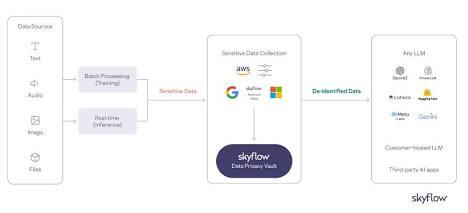
AI security agents vs. LLM hackers defense architecture. Source: Skyflow
Axeploit: Defending at the Speed of Machines
Axeploit is engineered specifically for this new reality. As an autonomous, AI-driven vulnerability scanner, it abandons the brittle constraints of legacy DAST tools in favor of an intelligent fleet of AI security agents. By deeply integrating large language models into its scanning methodology, Axeploit continuously tests your attack surface using the exact methodologies employed by modern LLM threat actors.
- Autonomous Authentication & Session Integrity: Legacy scanners require security engineers to manually feed them session tokens or record fragile login macros. Axeploit operates as a synthetic, intelligent user. It autonomously provisions real mobile numbers and email addresses, registers accounts, intercepts SMS/email OTPs, and verifies identities to log in.
Once inside, its AI actively tests session integrity by fuzzing OAuth state parameters to uncover CSRF flaws, and intercepting JWTs to attempt advanced algorithm demotion and signature stripping attacks.
- Layout-Aware Intelligence: Traditional automated scanners break the moment a frontend engineering team redesigns the SSO login page or alters an API route. Axeploit’s LLM engine natively understands the semantic purpose of UI elements. It “sees” and adapts to frontend layout changes in real-time without breaking the test flow, ensuring uninterrupted continuous penetration testing.
- The “No Exploit, No Report” Philosophy: Alert fatigue is a critical data problem in modern SOCs. Axeploit fundamentally solves this through automated PoC (Proof of Concept) generation. When an Axeploit agent identifies a potential vulnerability, it does not simply flag it based on a fuzzy regex match.
It moves through a strict Discovery → Hypothesis → Exploitation → Verification loop. It actively crafts custom payloads, circumvents WAF rules, and executes the exploit. If the exploitation fails, the hypothesis is discarded. Every single finding delivered in an Axeploit report includes a verified, working PoC, eliminating false positives entirely and giving developers exactly what they need to fix the issue.
- Continuous Zero-Day & Logic Flaw Discovery: Connected to a continuously updated intelligence engine, Axeploit scans across more than 7,500 vulnerability classes. From uncovering complex Insecure Direct Object References (IDOR) to internalizing the latest zero-day CVEs, Axeploit maps your workflows to uncover the deep business logic flaws that conventional tools historically miss.
By pushing security left and automating the hunt through native CI/CD webhooks, Axeploit ensures that your enterprise defenses evolve at the exact same pace as the offensive AI attempting to breach them.
Conclusion
As we navigate the realities of 2026, the cybersecurity landscape has permanently transformed. The weaponization of artificial intelligence has elevated the capabilities of threat actors, turning once-complex, manual attack vectors into automated, scalable, and highly adaptable campaigns. When adversaries leverage offensive AI to execute real-time WAF evasion, synthesize custom payloads, and accelerate zero-day discovery, relying on legacy static tools and point-in-time manual audits is a guaranteed recipe for compromise.
CISOs and Security Architects must acknowledge a hard truth: human speed and static rules are no longer sufficient to secure modern enterprise infrastructure. The paradigm has fundamentally shifted, and you must fight intelligent machines with intelligent machines. Deploying continuous AI security agents like Axeploit is no longer just a strategic operational advantage, it is a foundational necessity. By integrating autonomous, layout-aware security platforms that continuously authenticate, map, and exploit vulnerabilities before the attackers do, organizations can successfully reclaim the high ground in the era of autonomous cyber warfare.