AI tools completely transform modern software development workflows. When you prompt for a user dashboard, the output delivers polished React components complete with interactive charts and visualizations. Tweak via conversational chat with a simple instruction like "Add dark mode functionality." Changes appear instantly without manual coding. Backend API endpoints scaffold themselves in mere seconds with full CRUD operations ready. Complete deployment pipelines generate automatically with optimized configurations. New features flow continuously without interruption. Ship times plummet dramatically from weeks to hours.
What AI tools completely skip are boundaries, those essential perimeters that confine potential damage and limit blast radius when attacks succeed. Features expand the attack surface area exponentially with each new capability added. AI tools pile on complex business logic relentlessly. Attackers circle the edges methodically looking for unprotected seams. AI builds applications inward toward richer functionality. Security thinking must work outward to establish defensive perimeters.
Builders celebrate impressive AI output with impressive demos and screenshots. Risks lurk silently in completely undefined limits that receive zero attention. Features without proper fences invite unrestricted traversal by malicious actors. This post maps the critical omission in detail. It details every boundary type that gets neglected. It constructs scalable defenses that work with AI velocity.
The Feature-First Pipeline Powered by AI
AI integrates seamlessly everywhere throughout the development stack. VS Code Copilot autocompletes complex event handlers with perfect TypeScript signatures. Claude architects complete database schemas optimized for specific workloads. Devin agents refactor monolithic applications into clean microservices automatically.
The entire pipeline accelerates dramatically from initial specification to fully running application deployed to production in under one hour total.
To understand this transformation clearly, visualize a detailed flowchart tracing the complete feature-first pipeline from initial AI prompt through to live production deployment, breaking down each transformation step visually for complete clarity. The green zones highlight where AI completely dominates feature generation, effortlessly suggesting role-based data views, optimized search indexes, and polished UI components that work perfectly. The red zones expose massive boundary voids that emerge silently, including unlimited search result dumps exposing entire datasets and forgeable role enum strings that clients manipulate freely.
AI completely dominates the factory phase marked prominently in green throughout the flowchart, where it suggests sophisticated role-based views for different user types, creates optimized search indexes for performance, and generates feature-rich components that function flawlessly. However, the red zones expose critical boundary voids that proliferate unchecked across the pipeline, including unlimited search dumps that return entire datasets without pagination limits and role enum strings that remain completely forgeable by any client sending manipulated requests.
Why AI Omits Boundaries
Training data overwhelmingly favors functional completeness over defensive completeness. Public repositories showcase impressive features like "Full CRUD operations with realtime updates" that earn GitHub stars and attention. Essential protections like rate throttles and query governors receive zero celebration or documentation.
Prompts remain stubbornly feature-centric by nature. A simple instruction like "Build search functionality" yields powerful full-text matching capabilities. However, it completely omits pagination caps that prevent dataset dumps and projection limits that mask sensitive fields.
Iteration patterns reinforce the omission systematically. When developers request "Make it faster," AI adds database indexes immediately. However, it completely skips critical ACL access control list checks that prevent unauthorized data access.
Boundaries represent negative space conceptually, designed specifically to block potential exploits before they cause damage. AI excels at positive feature construction exclusively. The contrast between these approaches proves stark and dangerous.
Case study: An AI-generated task manager delivers impressive features like task assignment, threaded comments, and document sharing capabilities. The boundary miss proves catastrophic: the share endpoint accepts any userID parameter without validation, enabling complete lateral movement across all user accounts.
Boundary Types AI Neglects
Data Boundaries: AI features enable querying user profiles successfully. The gap exposes SELECT * queries without ownership filters. Attackers paginate through entire customer datasets systematically.
Compute Boundaries: Realtime update features broadcast changes instantly. The gap lacks subscription limits entirely. Attackers flood thousands of client connections simultaneously.
Privilege Boundaries: Role-based features use enum strings like "admin" and "user." The gap trusts client-sent role values without server verification.
Resource Boundaries: File upload features process documents smoothly. The gap imposes no size limits or type validation. Attackers fill disks completely with junk payloads.
Network Boundaries: API endpoints remain wide open by default. The gap includes no IP whitelists and CORS policies set to wildcard * allowing any origin.
Expanded example: Inventory management app built by AI generates this endpoint:
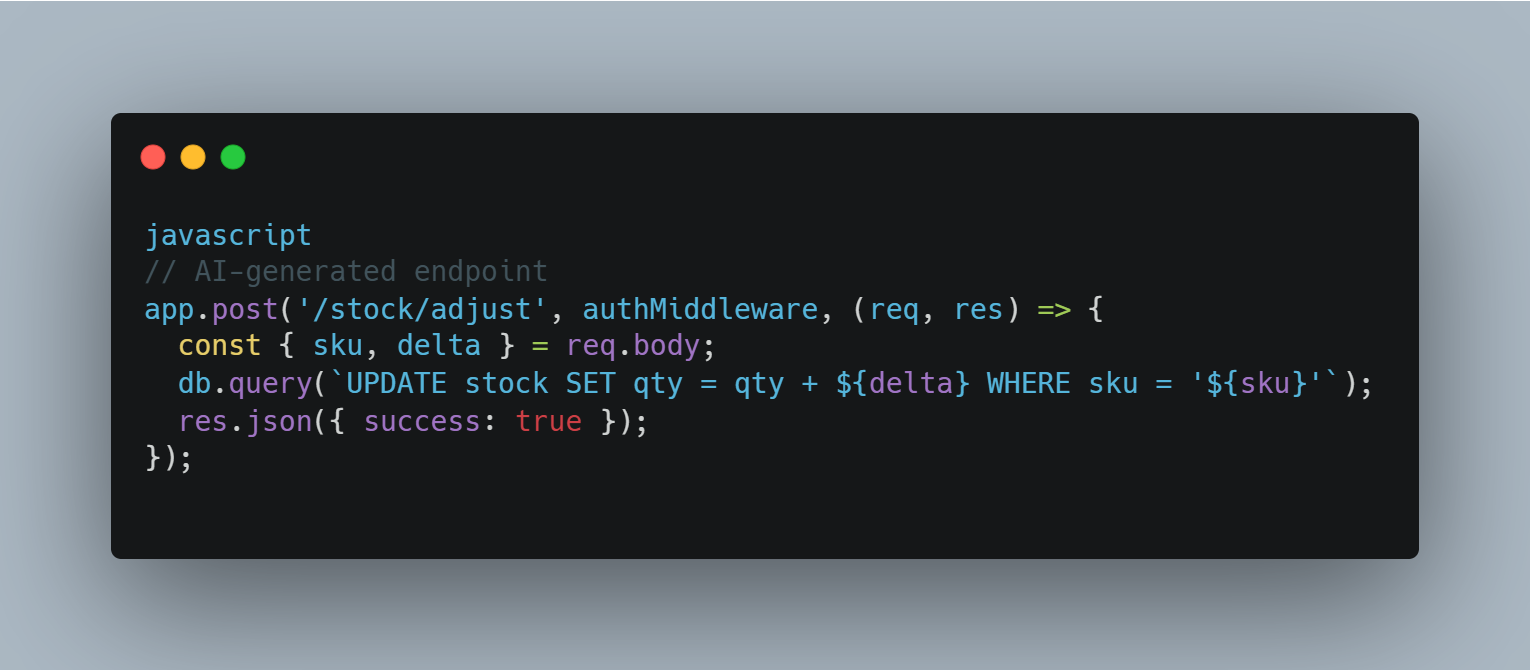
Features work perfectly when adding +10 apples to inventory. The gap proves devastating: attackers set delta=-999999 with sku=prestige-item for instant depletion, plus SQL injection bonus from raw query concatenation.
Deeper Dive: Boundary Failures in Practice
Real-world patterns emerge consistently from AI-assisted development projects across industries.
Enumeration attacks: Login features helpfully display "user not found" messages. The gap reveals timing differences that leak account existence through measurable response delays.
Amplification vulnerabilities: Notification features ping users efficiently. The gap enables recursive ping chains creating self-inflicted DoS conditions.
Chaining exploits: Search features plus export functionality work independently. The gap allows uncapped search results piped directly to CSV exports perfect for phishing campaigns.
State drift attacks: Session roles display correctly in UI. The gap trusts client-side role storage without server revalidation on every request.
Incident deep-dive: Freelance marketplace platform used AI scaffolding for bidding system. Features included placing bids and listing active bids with smooth prompt iterations adding filtering capabilities. The gap centered on /bids?user_id=1&sort=desc&limit=9999 endpoint lacking user_id authorization completely. Competitors scraped entire bid history systematically. Server logs showed 10k requests per minute before emergency mitigation deployed.
Constructing Boundaries Manually
AI builds impressive feature cores rapidly. Humans must define defensive perimeters deliberately around every capability.
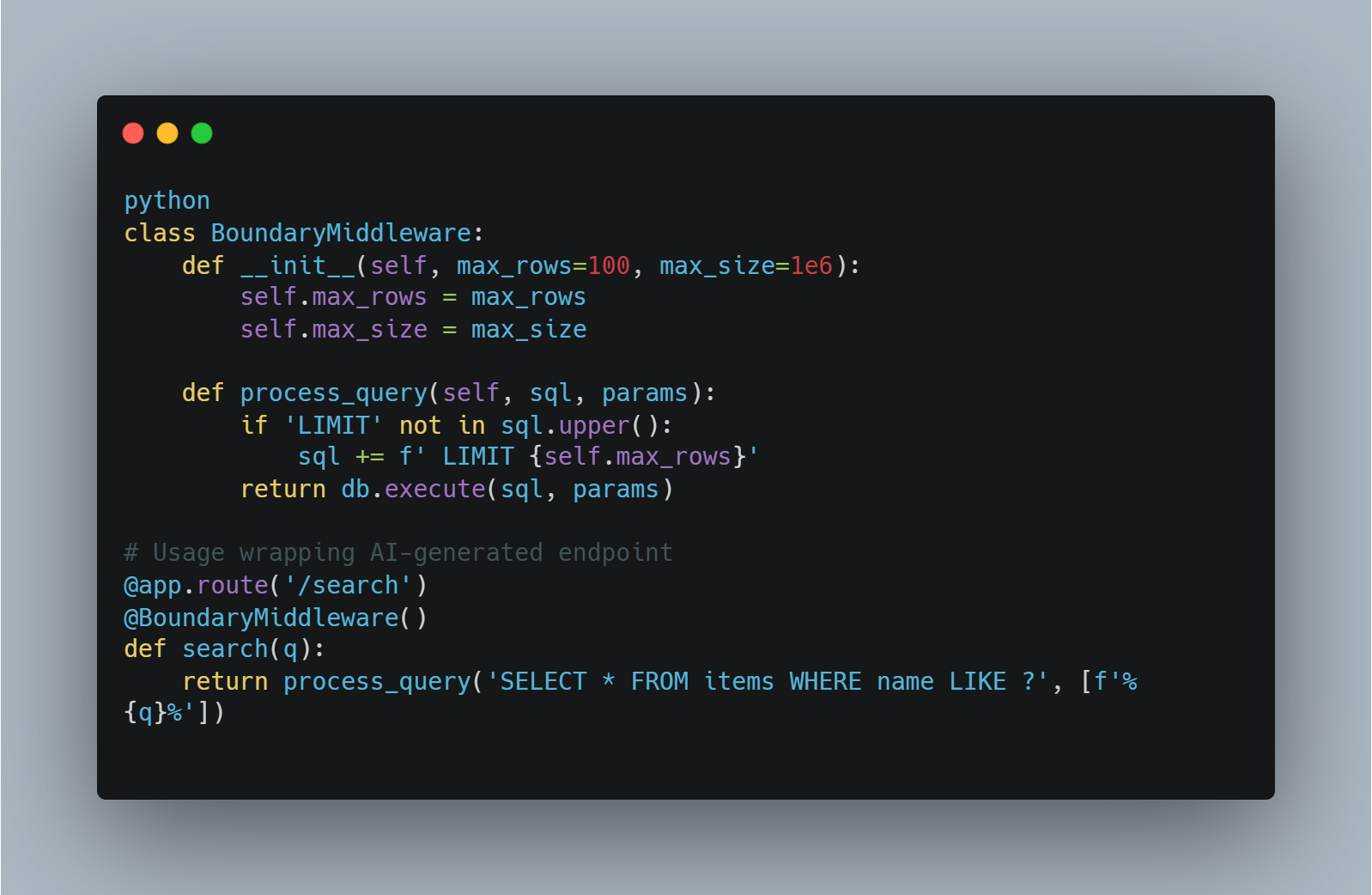
Layer 1: Code-Level Gates
Wrap every AI-generated feature with boundary middleware:
Layer 2: Infra Policies
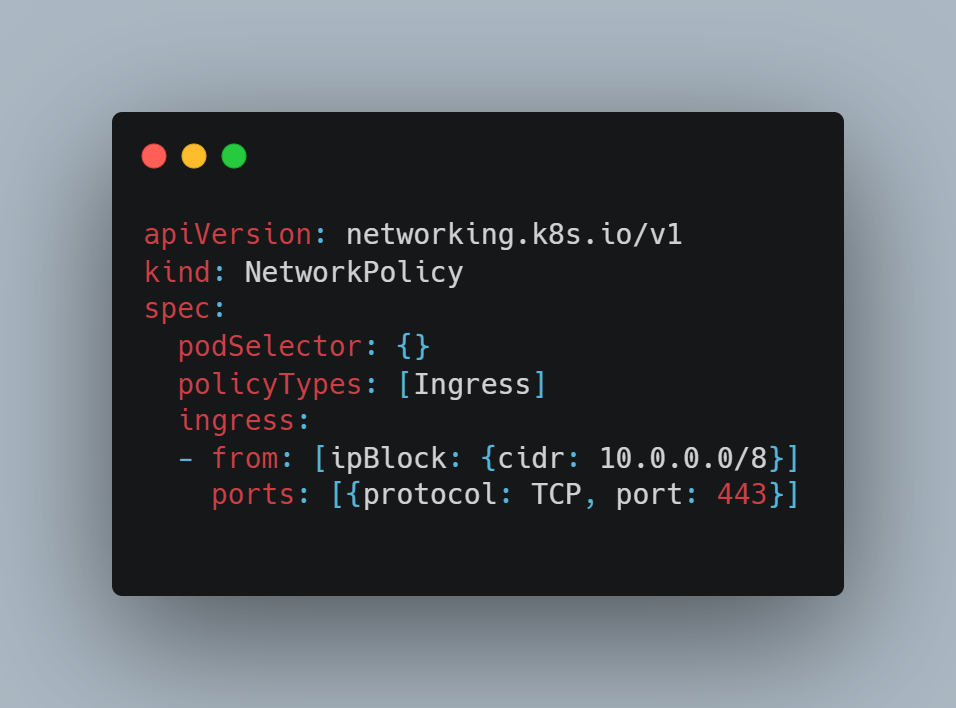
Kubernetes NetworkPolicies restrict traffic precisely:
Layer 3: API Gateway
Kong plugin stack enforces comprehensive protection: rate limit 50 requests per minute per API key, JWT token verification mandatory, request body transformation with sanitization applied universally.
Layer 4: Data Constraints
Postgres database enforces constraints at storage layer:
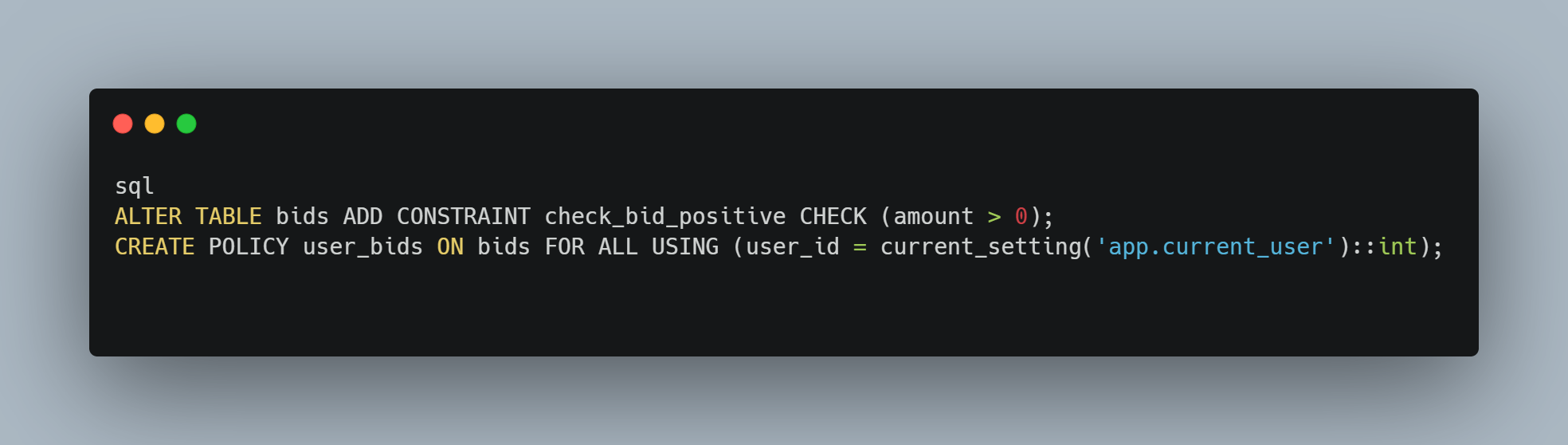
Workflow: AI generates feature code first, boundary wrappers added second, semgrep scans rules/boundaries.yaml configuration third, then secure deployment executes automatically.
Advanced Boundary Patterns
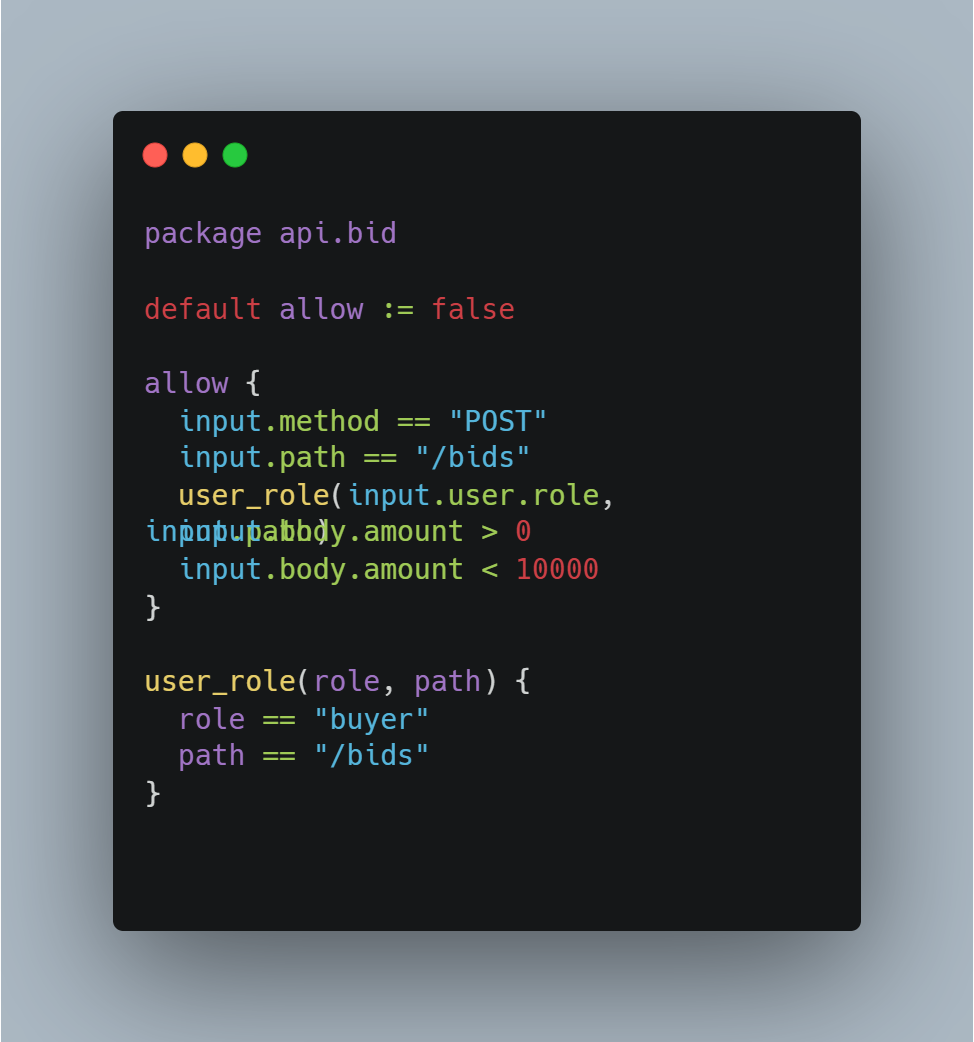
Zero-Trust Features: Every AI-generated endpoint proxies through centralized policy service. OPA Open Policy Agent decides access dynamically:
Dynamic Boundaries: Machine learning models score incoming payloads continuously. High entropy content triggers immediate throttling.
Circuit Boundaries: Feature chains implement fail-safe patterns preventing cascade failures across dependent services.
Case study: Evolved HR portal used AI iteration for resume upload and candidate search capabilities. Boundaries added systematically: upload endpoints integrated VirusTotal scanning asynchronously, search implemented vector database cosine similarity capped at 0.9 with top-20 result limits, OPA policy engine loaded comprehensive role matrix at runtime. Withstood complete 3-month red-team simulation unscathed.
Operational Boundary Maintenance
Boundaries drift as features evolve continuously. Vigilance remains constant across entire lifecycle.
Diff Alerts: Pull requests flag any boundary middleware removals automatically during code review.
Chaos Probes: Weekly fuzzing simulates production-like traffic targeting boundary implementations specifically.
Metrics: Track boundary enforcement hits per second across entire fleet. Sudden spikes trigger immediate investigation.
Audits: Quarterly penetration testing plus code reviews focus exclusively on boundaries.yaml configuration files.
Teams: Allocate 20% engineering time specifically for boundary upkeep and evolution. Dividends compound over quarters.
Scale: Service mesh implements boundaries uniformly across entire fleet. Envoy proxy fleet maintains consistent enforcement.
Cost analysis: Initial development time doubles with boundary implementation. Runtime overhead consumes 0.1% CPU capacity only. Breach avoidance proves completely priceless.
Reframed: Boundaries as the Frame
AI tools frame vast canvases ready for endless innovation. Features fill those canvases colorfully and impressively. Boundaries crop the canvas securely preventing overflow. Tools build capabilities without natural limits. Human minds impose essential constraints deliberately. Durable applications constrain wisely balancing infinite possibility with finite protection.