Back in 2003, the industry consensus for The Absolute Minimum Every Software Developer Must Know included Unicode and character sets. In 2026, a new rule has emerged: The keyboard is a leaky abstraction.
For decades, typing speed was treated as a proxy for productivity. Mechanical switches and ergonomic layouts were optimized to shave milliseconds off input latency. However, the reality is that coding is a thinking task, not a data entry task. Manually translating high-level architectural intent into low-level character streams is a slow process that operates at roughly 50 words per minute (WPM).
Human speech, by contrast, comfortably reaches 175 WPM. With the Wispr Flow workflow, the gap between the speed of thought and the speed of execution is finally closing.
Intent vs. Implementation: Breaking the 175 WPM Barrier
The traditional method of "writing" code involves manually typing every bracket, semicolon, and variable name. This is the Implementation Layer. It is tedious and tethers the brain to the mechanical speed of the fingers.
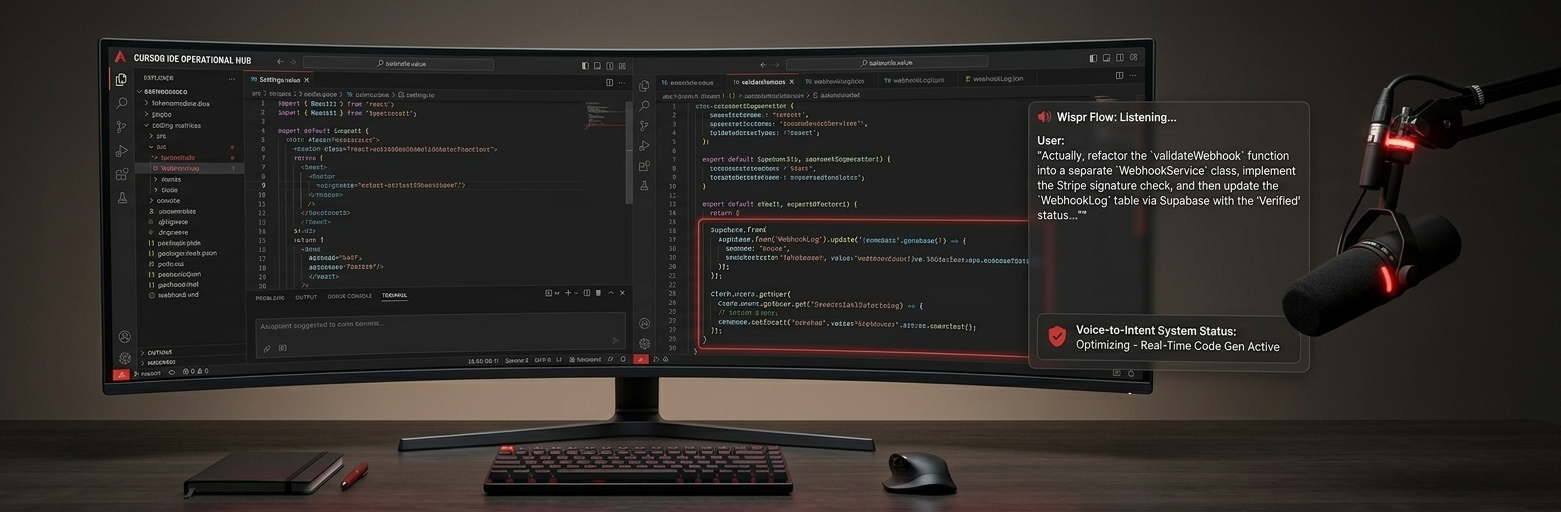
The Wispr Flow approach shifts the focus to the Intent Layer. Instead of typing, the developer describes the logic. Because Wispr Flow is context-aware and integrated directly into modern IDEs like Cursor, it does not require the dictation of syntax. It understands the existing ecosystem.
Describing a requirement such as "Create a Supabase edge function to handle the Stripe checkout webhook, then trigger an Axeploit scan on the new user's domain" happens at 175 WPM. This is not "writing code" in the traditional sense; it is specifying intent. The AI then handles the mechanical task of generating the actual TypeScript within the editor.
Why the Keyboard is a Leaky Abstraction
In software, a leaky abstraction occurs when the details of the underlying system force the user to deal with implementation instead of the actual problem. The keyboard is the ultimate leak. A developer may want to build a secure checkout flow, but the brain is frequently occupied with whether to use snake_case or camelCase.
By using voice-to-intent, the focus remains on the Surgical Context. The developer acts as the architect, describing the system while the AI acting as a high-speed junior developer implements the boilerplate.
The Workflow: From Voice to Hardened Logic
For those concerned that voice coding is merely "chatting with a bot," the professional reality of the 2026 workflow is highly structured:
- High-Bandwidth Input: Dictation allows for the expression of business logic at natural human speed (175 WPM).
- Syntax Awareness: Wispr Flow parses input rather than just transcribing it. It recognizes Supabase schemas and Clerk auth patterns, applying the correct formatting automatically.
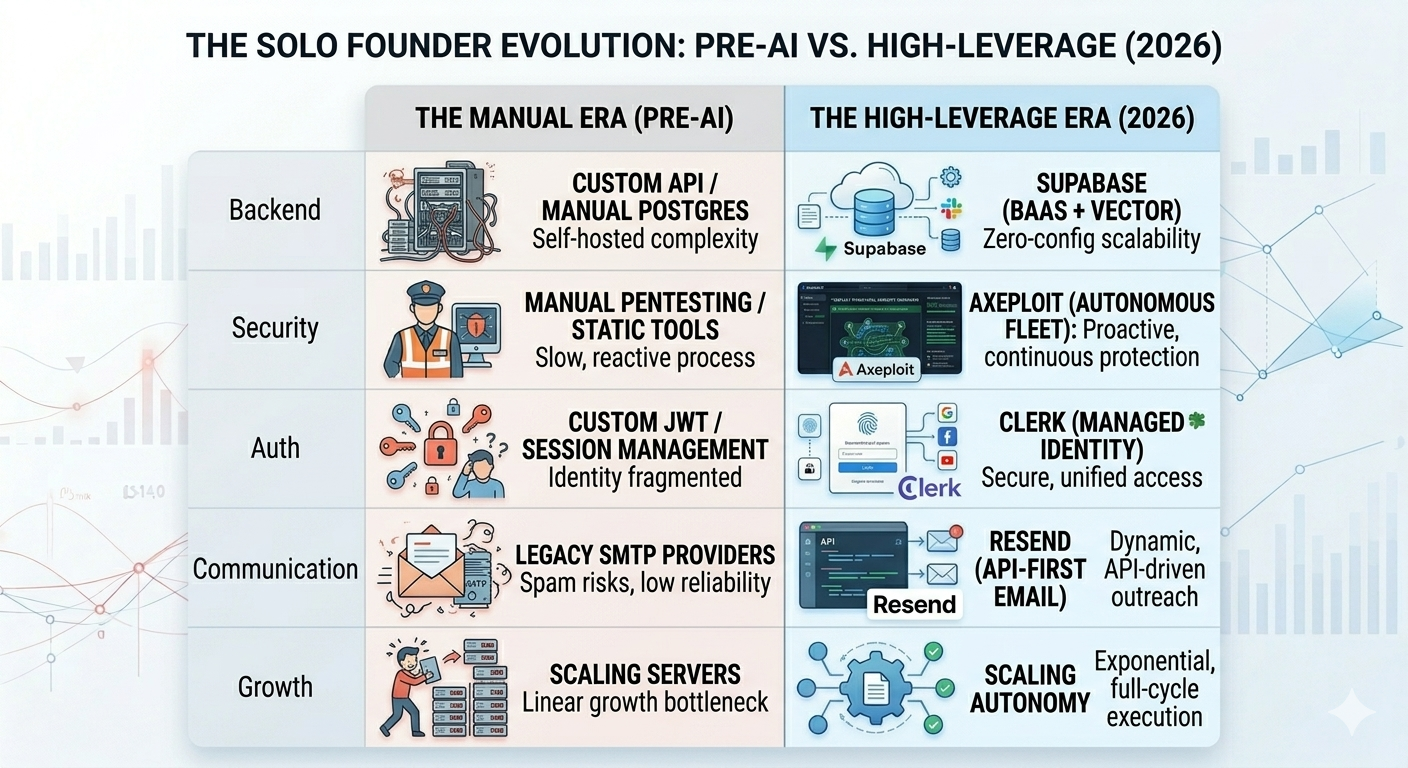
- The Axeploit Safety Net: Coding at 175 WPM moves faster than manual security checks can follow. While the code is generated, the Axeploit Autonomous Fleet probes the logic for vulnerabilities in real-time.
- Verification Over Typing: The time saved on manual entry is redirected toward reviewing the output. The developer becomes a high-level auditor of their own intent.
Comparison: The Bandwidth of Innovation
The Bottom Line
For the next generation of developers, value is no longer found in the speed of typing npm install. It is found in the ability to clearly articulate the logic of complex systems. For the established guard, it is time to move past the mechanical keyboard.
Typing is a 20th-century bottleneck. In 2026, the most productive developers are those who speak their vision into existence, while Axeploit ensures that vision is structurally sound.
The future of development is not typed; it is spoken.