On June 23, 2026, Tata Electronics publicly confirmed it was hit by a cyberattack a few weeks earlier. The official line is calm: response protocols deployed immediately, business operations unaffected, no impact on customers. The unofficial line is louder. A data extortion crew called World Leaks posted directories on its leak site that allegedly contain internal Apple manufacturing material from Tata's iPhone production lines: component schematics, PCB designs, material specifications, and SDK files.
Tata makes iPhones and iPhone components for Apple. That single fact is why this story stopped being an Indian manufacturing headline and became a global supply chain story within hours.
If you ship anything to anyone, the interesting part is not Tata. It is how the attackers worked and how little encryption had to do with it.
What We Can Treat as Confirmed
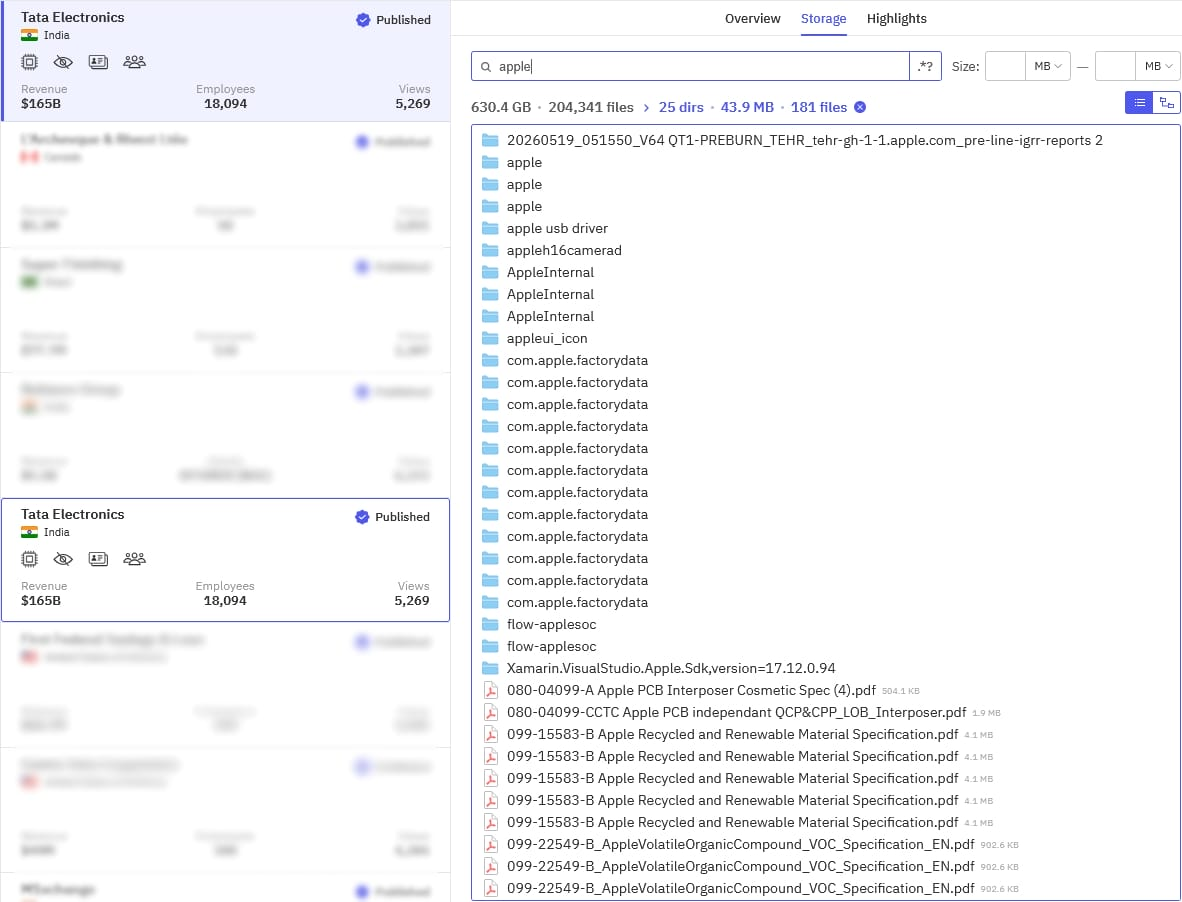
Two things are on the record. Tata Electronics says it identified a cybersecurity incident on some of its systems several weeks ago and that operations were not disrupted. World Leaks claims responsibility on its extortion portal and is publishing what it says are stolen files.
What is not on the record yet: which Apple programs the data actually covers, whether Apple's own networks were touched, the initial access vector, the dwell time, and how much of the leak set is real versus filler. Apple had not commented publicly when the story broke. Tata has not named the threat actor.
That gap is normal. Public incident statements give you the legal minimum and almost no forensics. The lessons are in the attacker model, not in the press release.
Why World Leaks Is the Real Story
World Leaks is widely reported to be a rebrand of Hunters International, a ransomware crew that wound down its encryption operation in July 2025. The rebrand is not cosmetic. It is a business model shift.
Hunters International used to encrypt files and extort victims for a decryption key. World Leaks skipped that step. It steals files and threatens to publish them. No ransomware payload runs. No machines get locked. Backups do not save you, because backups were never the leverage. The leverage is that your data, your customer's data, or your customer's customer's data ends up on a portal anyone can browse.
The same group hit Dell in July 2025 and claimed 1.4 TB from Nike in January 2026. Tata is now on that list. The pattern is consistent: large enterprise, sensitive third party data, public leak portal, no encryption.
For defenders this matters in a concrete way. The detections most teams built over the last decade look for ransomware behavior: rapid file rewrites, shadow copy deletion, known encryptor binaries. A pure exfiltration operation triggers none of those. The bad day arrives as a normal looking outbound transfer over weeks, not a screen full of red ransom notes.
The Supply Chain Lesson, Stated Plainly
You do not have to be Tata to inherit this risk. You inherit it any time a vendor holds data that belongs to your company, your customers, or your product.
Three uncomfortable questions for every vendor relationship you own:
- What data do they actually have? Not what your contract says. What sits on their disks, in their staging buckets, and in the email threads between your team and theirs.
- How would you find out if it leaked? If the answer is "we'd hear from a reporter," the answer is wrong.
- What is your public statement before, during, and after a vendor incident? Draft it now. The Tata statement is short for a reason. Write a version of it for the day one of your vendors lands on a leak site.
The CISA Stop Ransomware guide and the #StopRansomware Guide PDF cover the response side. NIST's SP 800-161 supply chain risk practices covers the prevention side. Neither is light reading. Both are cheaper than your customers finding out from a leak portal.
What To Actually Audit This Week
You cannot fix Tata. You can fix your own exposure to the same playbook.
Inventory third party data flows. Every SaaS, contractor, manufacturer, payment processor, analytics tool, and AI vendor that handles your data goes on one list. If you cannot produce that list in an afternoon, that is the first finding.
Minimize what vendors hold. Strip fields they do not need. Tokenize anything you can. The data not shared is the data not leaked.
Detect exfiltration, not just intrusion. Outbound transfer baselines, DNS tunneling alerts, and large object storage reads matter more in the World Leaks era than yet another EDR rule. Industry detection coverage research keeps landing on the same number: most teams log a fraction of successful attacks and alert on far less.
Treat schematics, source, and SDKs like crown jewels. The Tata leak claim is specifically about engineering artifacts, not customer PII. Engineering data is exfiltration gold because it does not expire. A leaked PCB design is still valuable years later.
Run a vendor breach tabletop. One hour. One vendor. Your CEO, legal, communications, and engineering in the room. The first time you write the holding statement should not be at midnight.
Where Axeploit Fits
Pure data extortion changes what you have to test. Not "can attackers run code on my box," but "can attackers get my files out without anyone noticing." Those are different questions and they need different probes.
Axeploit's fleet of AI agents probes the surfaces attackers actually use to walk data out: auth boundaries that leak more than they should, API endpoints that return adjacent users' records, file download routes with weak object scoping, and integrations that trust callers they should not. You submit a URL. The agents map your app, attack it, and hand you a list of the data exposure paths an attacker would find first.
Read a breach story, then ask whether your own stack would have shipped the same gap. Tata will not be the last name on the World Leaks portal this year.
Scan your app now: https://panel.axeploit.com/signup
References
https://www.cisa.gov/stopransomware
https://www.cisa.gov/sites/default/files/2023-10/StopRansomware-Guide-508C-v3_1.pdf
https://csrc.nist.gov/pubs/sp/800/161/r1/upd1/final