You added email OTP verification to your signup flow. A user registers, receives a six-digit code, enters it, and gets access. You tested it manually, it worked, and you moved on to the next feature.
Here's what you probably haven't considered: your security scanner has never made it past that step. It doesn't have an inbox. It can't receive your OTP. Which means every page, endpoint, and feature behind your login has never been scanned for vulnerabilities.
That's not a small gap. That's the majority of your application.
Why OTP Verification Matters More Than You Think
Email OTP verification exists for a reason. It confirms that the person signing up actually controls the email address they provided. Without it, attackers can create accounts with stolen or fake emails, abuse your platform, and hide behind identities that aren't theirs.
The verification step also gates access to your authenticated features. User dashboards. Account settings. Payment flows. Admin panels. API endpoints that require a session token. All of these sit behind the login wall, and all of them are where the serious vulnerabilities live.
Think about it. Unauthenticated pages are mostly static. A marketing page, a pricing page, public API docs. The attack surface there is limited. The real risk sits in what happens after login: SQL injection in search queries, broken access control on user data, IDOR vulnerabilities in API endpoints, privilege escalation paths. These are the bugs that lead to data breaches, and they only exist in authenticated parts of your app.
If your scanner never logs in, it never finds them.
Why Traditional Scanners Can't Get Past OTP
Traditional security scanners work by crawling your application and testing the endpoints they find. They follow links, submit forms, and analyze responses. Some of them support authentication by accepting a session token or a username/password combination you provide manually.
But OTP verification breaks the entire model. The scanner can fill in an email address and submit the registration form. Then your app sends an OTP to that email address. And the scanner has no way to read it.
It doesn't have a real email inbox. It can't open an inbox, find your verification email, extract the six-digit code, and type it into your verification form. That workflow requires receiving email, parsing content, and interacting with your UI in sequence. Traditional scanners weren't built for that.
So what happens? The scanner hits the OTP screen and stops. It either marks the authentication flow as "unable to complete" or quietly moves on to testing only the unauthenticated surface. Your dashboard, your user settings page, your payment endpoints, your admin routes: all go untested.
Some tools try to work around this by asking you to manually provide a session token. You log in yourself, copy the cookie or JWT, and paste it into the scanner's configuration. That gets the scanner past the login page, but it creates its own problems.
That token expires. Your session might last 30 minutes or an hour. The scanner needs time to crawl and test hundreds of endpoints. Halfway through, the token dies and the scanner starts getting 401 responses. You either babysit it and keep refreshing tokens, or you accept that half your scan results are incomplete.
And you still haven't tested the OTP flow itself. Is the OTP rate-limited? Can an attacker brute-force all 999,999 combinations of a six-digit code? Does the OTP expire properly? Can it be reused? These are real attack vectors, and your scanner never even attempted them.
How Axeploit Handles the Full Authentication Chain
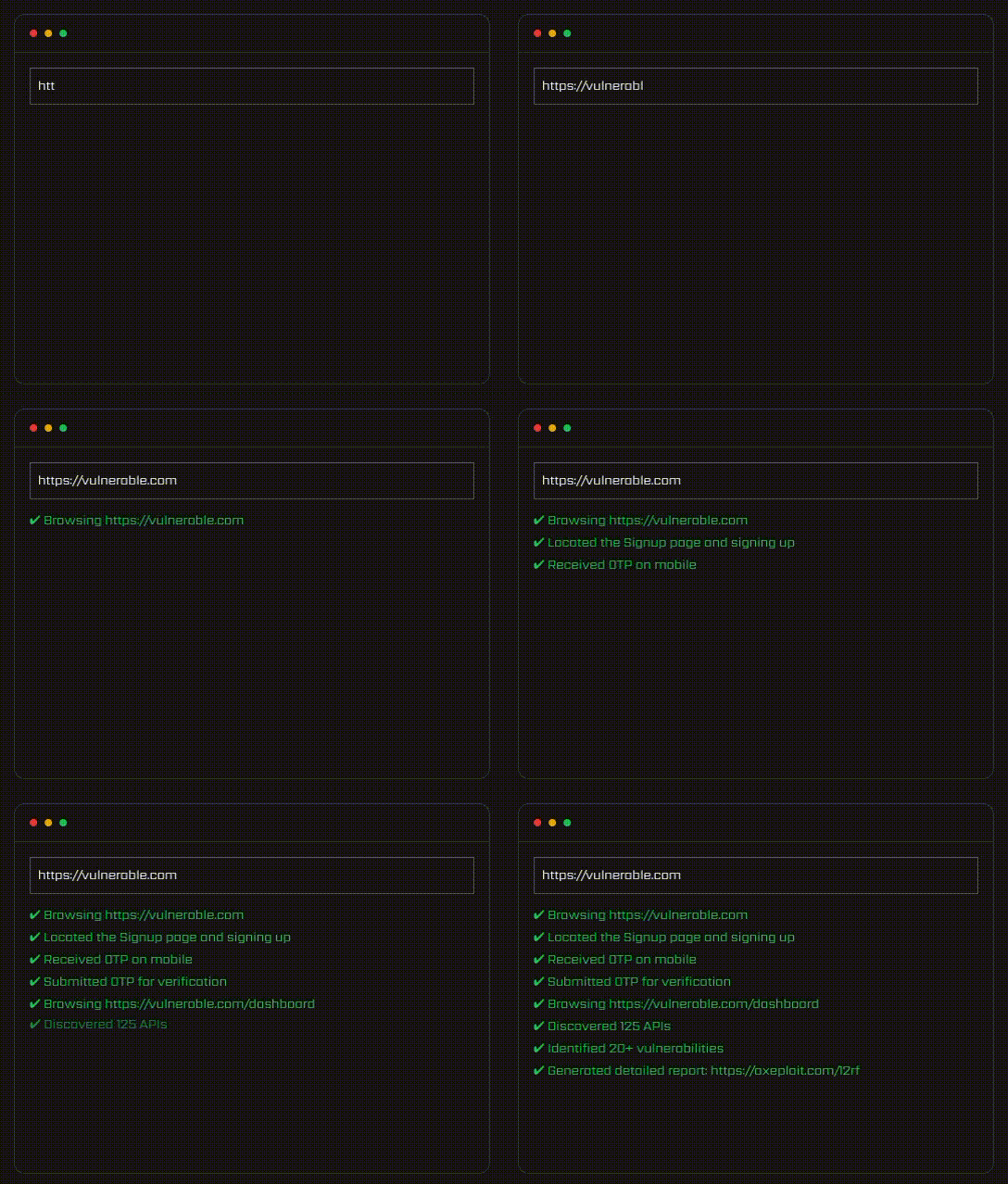
Axeploit doesn't ask you for session tokens. It doesn't need your API spec. It doesn't stop at the OTP screen.
The AI agents have their own email addresses. Real inboxes that receive mail. When an agent encounters a signup form that requires email verification, it uses one of its own addresses, submits the form, waits for the OTP email, reads it, extracts the code, and enters it into the verification page. The full flow, exactly like a real user. Exactly like a real attacker would try.
Once past the OTP gate, the agents have a live authenticated session. They crawl your dashboard, test your API endpoints, probe access controls, and check every authenticated feature for vulnerabilities. The parts of your app that actually matter get tested because the agents can actually reach them.
But it goes further than just getting past login. The agents test the OTP mechanism itself. Can the code be brute-forced? Is there rate limiting on verification attempts? Does the code expire after the expected window? Can a code be used twice? Is the code long enough to resist guessing? These checks happen automatically because the agents interact with the OTP flow directly instead of skipping over it.
No configuration. No manual token rotation. No endpoints to map. You give Axeploit a URL and it handles the entire authentication chain, from signup to OTP to full authenticated testing.
Your Authenticated Surface Is Your Real Attack Surface
If you're running a security scanner that only tests what's publicly accessible, you're testing the part of your app with the least risk and ignoring the part with the most. The front door is locked while every room inside goes unchecked.
OTP email verification is a critical security control. It deserves to be tested, not skipped. And everything it protects deserves to be scanned.
Run a full authenticated scan: https://panel.axeploit.com/signup