If you are a CTO, Lead Developer, or Project Manager at a software agency, you already know the feeling. The code is polished, the final QA sprint is complete, and the application is ready for production. But before the final invoice is paid and the keys are handed over, there is one last hurdle: the client handover security check.
Historically, this phase of the software development lifecycle (SDLC) has been a battleground. For development teams, a late-stage security review often means stalled deployments, scope creep, and weeks spent wrestling with legacy vulnerability scanners. For the client on the receiving end, it’s a moment of anxiety, they need absolute certainty that the shiny new application they paid for isn't going to cause a massive data breach on Day One.
But as we navigate the threat landscape of 2026, the friction surrounding the handover is evolving. You are right to resist the clunky, slow, and expensive legacy methods of security auditing. However, establishing digital security and trust at the point of handover is no longer optional; it is a critical business mandate.
Here is an insider’s look at why your resistance to traditional handover audits is justified, what a modern 3rd party security audit should actually look like, and how next-generation, AI-driven tools are turning the security handover from a bottleneck into a competitive advantage.
Why You’re Right to Resist the Security Handover (The Friction is Real)
Let’s validate your frustration: traditional security handovers are broken. If you are hesitant to invite legacy cyber security audit firms or deploy traditional vulnerability scanners into your staging environment right before launch, your instincts are correct.
For years, development teams have dreaded this phase for three very valid reasons:
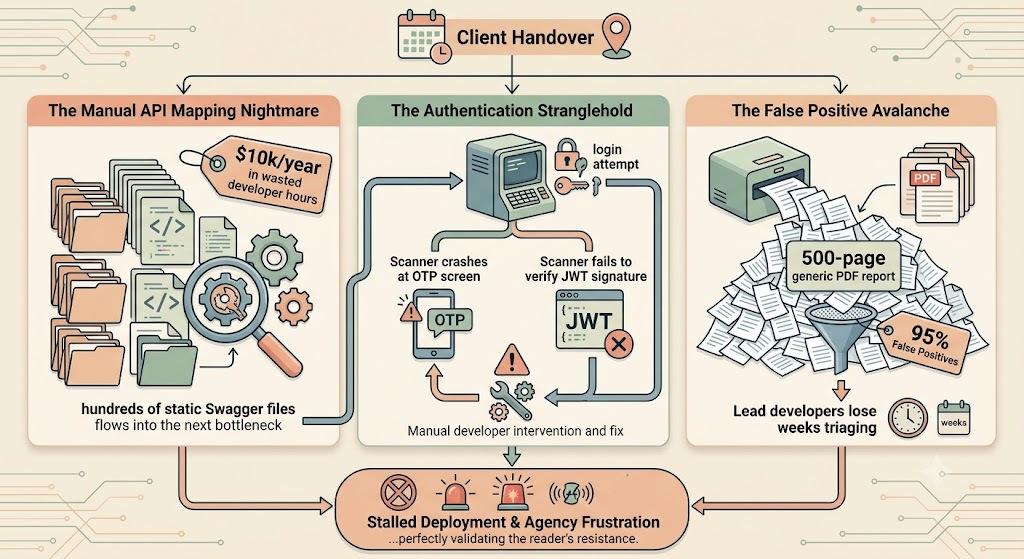
- The Authentication Bottleneck: Traditional scanners are notoriously bad at handling modern authentication workflows. Over 30% of all application vulnerabilities originate in auth flows (like password resets, OAuth, or OTPs). Yet, legacy tools require you to manually record session flows or hand over static credentials. They fail entirely when faced with mobile OTPs, email verifications, or CAPTCHAs.
- The "Hidden Cost" of API Mapping: Modern applications are heavily API-driven. Traditional security tools require your engineering team to manually integrate and map out every single API endpoint before a test can even begin. If you have 150 APIs, maintaining and updating that integration costs thousands of dollars in lost developer hours.
- False Positives and Alert Fatigue: Nothing stalls a project handover faster than a 300-page PDF generated by a legacy scanner, filled with low-priority false positives that your lead developers now have to manually triage and dispute.
Your resistance isn't about avoiding security; it’s about avoiding inefficiency. You want to ship code, not spend three weeks configuring a scanner.
The Imperative for an Independent Security Audit
Despite the friction, skipping the handover check is a fast track to disaster. The moment the software moves from your agency’s servers to the client’s production environment, liability shifts.
Whether you are delivering a massive enterprise SaaS product or running a security audit for indie founders launching their first mobile app, an independent security audit serves as your ultimate safety net.
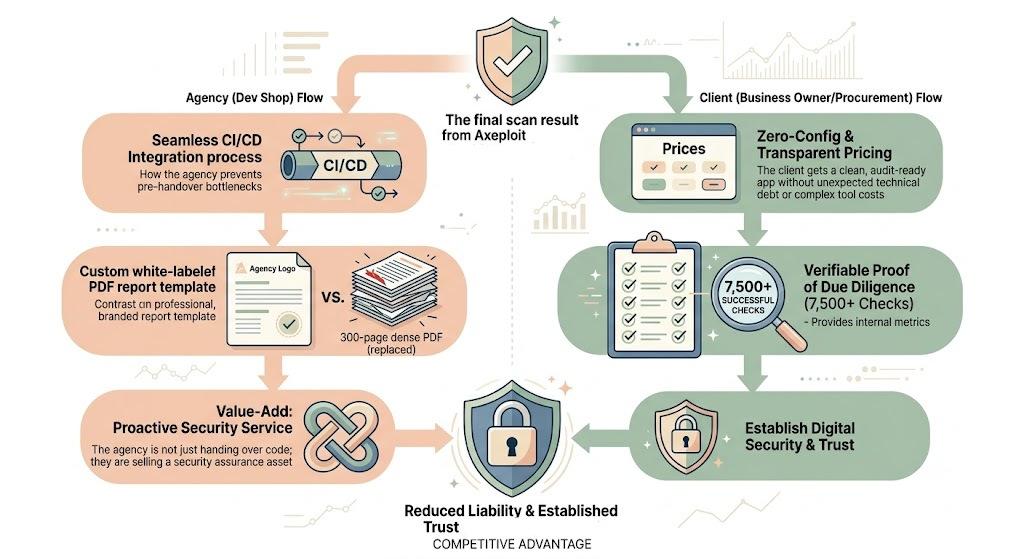
- For the Client: It provides verifiable proof of due diligence. They aren't just taking your word that the app is secure; they have empirical evidence.
- For the Development Agency: It acts as a clear "line in the sand." An audit proves that the application was secure at the exact moment of handover. If the client's internal team misconfigures a server six months later, the baseline audit protects your agency's reputation.
Conducting a digital security audit isn't just about finding bugs; it’s about establishing digital security and trust. It proves to the end-client that you treat their data protection as seriously as you treat their UI/UX design.
What to Look for in Modern Cyber Security Audit Firms and Tools (2026 Standards)
If legacy tools are out, what should you actually look for in a 2026-ready security partner or platform? The threat landscape has shifted dramatically, with the rise of AI-driven cyberattacks, complex microservices, and rapid CI/CD pipelines, old-school vulnerability scanning simply doesn't cut it.
Whether you are hiring a firm or deploying a platform in-house for your agency, they must excel in these four deeply technical, modern criteria:
1. Context-Aware & Agentic AI Penetration Testing
A standard vulnerability scan simply checks your software against a list of known bad code signatures. A modern audit must leverage Agentic AI, artificial intelligence that doesn't just scan, but autonomously explores and attacks the application's unique business logic.
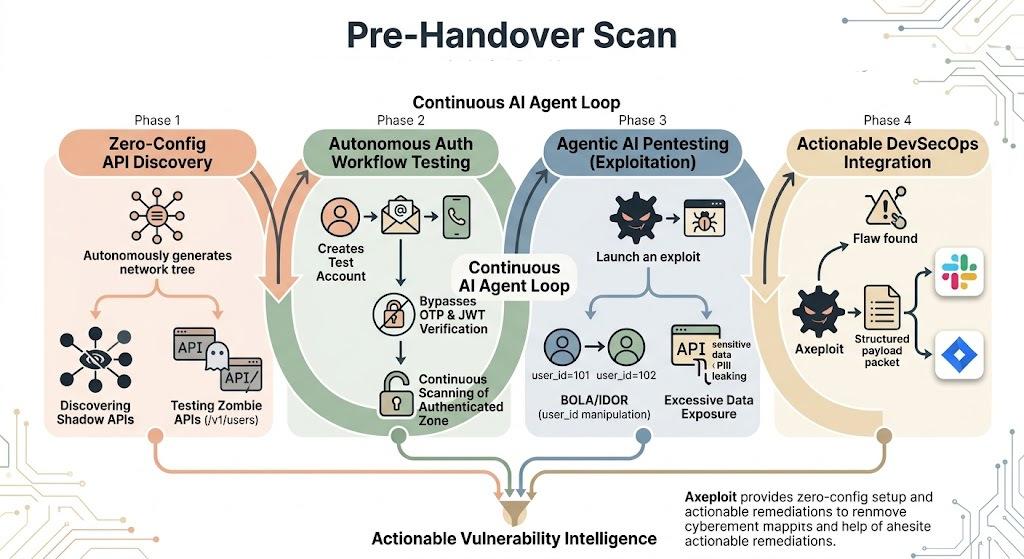
- Testing for BOLA/IDOR: Broken Object Level Authorization (BOLA) remains the single most devastating API flaw in 2026. This happens when an attacker manipulates an object identifier (like changing user_id=101 to user_id=102 in a URL) to access someone else's data. Legacy scanners miss this entirely because it looks like a valid request. Modern tools must understand the context of the user session and actively attempt privilege escalation.
- Bypassing Client-Side Filtering: Many apps incorrectly rely on the frontend UI to hide sensitive data. A modern audit tool intercepts the raw API response to ensure excessive data exposure (like returning full user objects including passwords/tokens) isn't happening under the hood.
2. Zero-Configuration API Discovery (Solving the "Shadow API" Crisis)
Modern applications are a massive web of APIs. One of the biggest risks during handover is Shadow APIs (undocumented endpoints) and Zombie APIs (deprecated versions like /v1/users left active while the app uses /v2/users).
- Dynamic Schema Inference: Your security tool should not require your lead developer to spend three days uploading and maintaining OpenAPI/Swagger files. In 2026, top-tier tools autonomously map the application, discover undocumented endpoints by observing traffic and UI behavior, and test them automatically.
- Unrestricted Resource Consumption Limits: The tool must test if your endpoints can be overwhelmed. Without proper pagination and rate-limiting checks, attackers can launch application-layer DoS attacks or rack up massive cloud infrastructure bills.
3. Autonomous Authentication Workflow Testing
Industry data reveals that over 95% of successful API attacks now occur within authenticated sessions. Your audit is useless if the scanner gets stuck at the login screen.
- Handling Complex Auth: The tool must have the capability to create its own test accounts, handle OTPs, verify email links, and manage JWT (JSON Web Token) expiration dynamically.
- Token Security: It should automatically test if your backend accepts tokens intended for different audiences, or if it fails to verify cryptographic signatures on JWTs.
4. Actionable DevSecOps Integration over "Compliance Fluff"
Your developers don't want a 500-page generic risk report; they want actionable fixes integrated directly into the tools they already use.
- Shift-Left Capabilities: Look for platforms that integrate into the CI/CD pipeline, catching vulnerabilities at the commit stage rather than waiting for the final handover day.
- Clear Remediation: Findings should include exact payloads to reproduce the bug, the specific endpoint affected, and code-level remediation advice delivered directly to Jira or Slack.
Legacy vs. 2026 Audit Standards
To quickly visualize the shift, here is what your development agency should demand from a security provider before handover:
- API Mapping: Legacy Security Tools (Pre-2024) required manual Swagger/OpenAPI uploads, whereas Modern Security Standards (2026) provide autonomous discovery of Shadow and Zombie APIs.
- Authentication: Legacy tools notoriously fail at OTPs/Captchas and require manual session tokens. In contrast, modern standards are fully autonomous, creating test accounts and natively handling complex OTPs and JWTs.
- Vulnerability Focus: Legacy scanning was limited to known CVEs and static code flaws (like SQLi or XSS), while modern audits prioritize complex business logic flaws, BOLA/IDOR, and excessive data exposure.
- Setup Time: Legacy tools demanded weeks of manual configuration and integration. Modern platforms boast zero-config setups where you simply point the tool at your staging environment and initiate the scan.
- Reporting: Legacy scanners generated dense, unreadable compliance PDFs. Modern standards deliver actionable, code-level alerts directly to developers via Slack or CI/CD, alongside pristine, white-labeled reports for the end-client.
Why Axeploit is the Ultimate Handover Security Partner
You know you need an audit to protect your liability, and you know legacy tools are too slow. This exact gap is why development teams, DevSecOps engineers, and forward-thinking agencies are standardizing their client handovers with Axeploit.
Axeploit is a zero-configuration, AI-powered vulnerability scanner designed specifically to eliminate the friction of the SDLC handover. Here is how Axeploit satisfies every modern 2026 security requirement and outperforms legacy cyber security audit firms:
1. Zero Config Setup (Point and Shoot)
With Axeploit, there are no manual API integrations or session recordings required. You simply point Axeploit at your staging application. Its layout-aware LLM (Large Language Model) engine navigates the platform independently. If your frontend team pushes a UI update mid-sprint, Axeploit adapts in real-time without breaking the scan flow.
2. Autonomous Authentication Workflows
Where traditional tools fail, Axeploit shines. Axeploit operates with its own mobile number and email address. It can register for your app, verify its email, bypass OTPs, log in, and test your authenticated routes just like a legitimate user. This ensures that the vulnerabilities hiding behind login screens are caught before the client ever sees the application.
3. Deep API Discovery and 7,500+ Vulnerability Checks
As Axeploit navigates your app, it automatically discovers and tests your APIs, shining a light on dangerous Shadow and Zombie endpoints. It scans for over 7,500 known vulnerabilities, from devastating BOLA/IDOR attacks to complex business logic flaws. Powered by a constantly refreshed CVE database and one of the world’s largest fuzzing databases, Axeploit ensures no endpoint is left unsecured.
4. Custom White-Labeled PDF Reports (The Ultimate Handover Asset)
This is where Axeploit becomes a revenue driver for development agencies. Once a scan is complete, Axeploit allows you to export the detailed findings as a sleek, professional PDF using your own custom branded templates.
Instead of just handing over source code, you can hand your client a massive value-add: a comprehensive, branded digital security audit report. It proves your competence, builds immense trust, and provides the exact CYA (Cover Your Assets) documentation both parties need.
5. Seamless CI/CD Integration and Transparent Pricing
Legacy tools charge exorbitant yearly maintenance fees for API updates, often costing tens of thousands of dollars. Axeploit’s transparent SaaS pricing (starting at just $199/month for 100 runs) democratizes enterprise-grade security. With native API access, Webhooks, and real-time Slack alerts, your lead developers can integrate Axeploit directly into their CI/CD pipelines.
Cementing Digital Security and Trust Before Go-Live
The client handover doesn't have to be a tense standoff between your developers and the client's risk management team. By leaning into a modern, 3rd party security audit process, you transform a point of friction into a showcase of your agency’s professionalism.
Clients today, from enterprise procurement teams to indie founders, are acutely aware of cyber risks. Providing them with a secure, thoroughly tested application, backed by tangible proof, is the ultimate way to establish digital security and trust.
Don't let legacy scanners slow down your deployment, and don't let a Day-One data breach ruin your agency's reputation. Integrate Axeploit into your workflow today, point our AI agents at your application, and generate a comprehensive, white-labeled handover report for your client in hours, not weeks.